
Table of Contents
ToggleIntroduction
In the archipelagic expanse of Indonesia, the concept of “sovereignty” is deeply tied to the availability of goods. As we move through 2026, the government’s maritime highway program, known as the “Tol Laut” (Sea Toll), continues to evolve from a subsidy mechanism into a highly efficient logistics backbone. At the spearhead of this evolution is PT PELNI (Persero), which has significantly ramped up its operations to secure the supply chain for the nation’s most vulnerable areas.
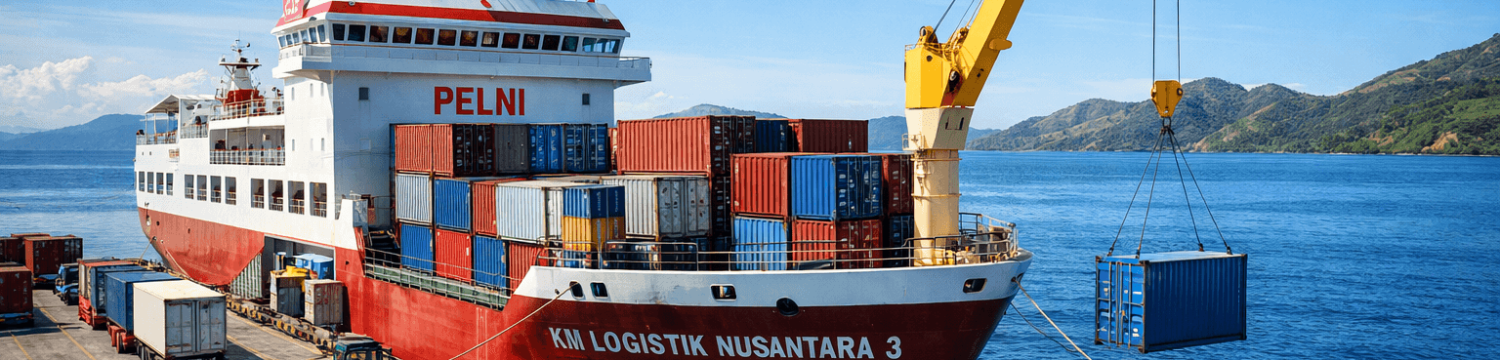
Specifically, the deployment and optimization of KM Logistik Nusantara 3 has become a case study in effective sea toll logistics 2026. Assigned to navigate the challenging waters of the 3TP regions (Underdeveloped, Frontier, Outermost, and Border), this vessel is not merely transporting cargo; it is transporting economic stability.
This article analyzes how PELNI’s strategic utilization of KM Logistik Nusantara 3 is narrowing price disparities, combating regional inflation, and defining the new standard for subsidized maritime logistics in 2026.
The Strategic Role of KM Logistik Nusantara 3
In the grand design of the Sea Toll program, specific vessels are assigned to specific “Trayek” (routes) to ensure regularity. KM Logistik Nusantara 3 has emerged as a lifeline for Eastern Indonesia.
Ensuring Schedule Regularity
One of the historic pain points of shipping to remote islands was unpredictability. In 2026, PELNI has implemented a precision schedule for KM Logistik Nusantara 3.
-
The Route: Typically serving the critical T-27 or T-28 routes (connecting hubs like Kupang or Tanjung Perak to islands like Rote, Sabu, and Waingapu), the vessel ensures that “Bapok” (Staple Goods) arrive on time.
-
Impact: This regularity allows local distributors in 3TP regions to manage inventory scientifically, rather than hoarding goods out of fear of supply voids.
Capacity Optimization
KM Logistik Nusantara 3 is designed to handle containerized cargo, which is a significant upgrade from the break-bulk methods of the past.
-
Dry and Reefer Containers: The vessel carries a mix of dry containers for rice, sugar, and flour, and reefer (refrigerated) containers for chicken and processed foods. This capability is crucial for sea toll logistics 2026, as it allows remote regions to access fresh protein sources that were previously too expensive or spoiled during transit.
Economic Impact on 3TP Regions
The primary KPI (Key Performance Indicator) for the Sea Toll program is price parity. The operation of KM Logistik Nusantara 3 is directly moving the needle on this metric.
Crushing Price Disparities
Before the optimization of this route, a sack of rice or a liter of cooking oil in Rote or Sabu could cost 40-50% more than in Java.
-
2026 Data: With the consistent arrival of KM Logistik Nusantara 3, price disparity in these specific nodes has dropped to single digits (below 10%). The logistics cost, which used to be the largest component of the retail price, has been subsidized and streamlined.
The “Rumah Kita” Synergy
The cargo form the ship doesn’t just sit at the port. It is integrated with “Gerai Maritim” or “Rumah Kita” (logistics centers) managed by SOEs. This ensures that the low-cost freight benefit is passed on to the consumer and not absorbed as extra profit by middlemen—a common issue addressed by stricter regulations in sea toll logistics 2026.
Analyzing the reach of Indonesia’s maritime logistics? Download our “2026 Sea Toll Route Map & Performance Report” to see which regions offer new market opportunities. [Download the Route Map]
Innovations in Sea Toll Logistics 2026
The operations of KM Logistik Nusantara 3 in 2026 are powered by digital advancements that were absent in the program’s early years.
LCS (Logistics Communication System)
PELNI has fully integrated its Sea Toll fleet with the National Logistics Ecosystem (NLE).
-
Digital Manifesting: Shippers can track their containers on KM Logistik Nusantara 3 in real-time. This visibility builds trust and encourages more commercial traders to utilize the return voyage (muatan balik), which historically has been empty.
-
Quota Management: The digitization ensures that subsidized cargo space is utilized strictly for essential goods, preventing the misuse of the program for non-essential commercial items.
Boosting Return Cargo (Muatan Balik)
A major focus of sea toll logistics 2026 is sustainability. The government is pushing for KM Logistik Nusantara 3 to return to its hub port full of local commodities.
-
Commodity Flow: Instead of returning empty, the vessel now transports seaweed, copra, and marine products from 3TP regions back to Java. This creates a circular economy, increasing the income of local producers in the border regions and reducing the overall subsidy burden on the state.
Challenges and Future Outlook
Despite the successes, operating in 3TP regions remains difficult.
-
Port Infrastructure: While the ship is modern, some destination ports still lack adequate container cranes, requiring the vessel to use its own gear (geared vessel), which slows down operations.
-
Weather Disruptions: High waves in the Timor Sea often challenge the schedule of KM Logistik Nusantara 3.
However, the commitment remains unshaken. The government’s continued investment in sea toll logistics 2026 proves that equitable development is non-negotiable.
Conclusion
The journey of KM Logistik Nusantara 3 is more than a shipping route; it is a promise kept. By strengthening the distribution of staple goods to 3TP regions, PELNI is ensuring that social justice extends to the furthest reaches of the archipelago.
As we look at the landscape of sea toll logistics 2026, the integration of reliable vessels, digital tracking, and the focus on return cargo establishes a sustainable model for the future. For businesses, this opens up new frontiers—markets that were once too expensive to reach are now accessible and thriving.
Interested in distributing your products to Eastern Indonesia via the Sea Toll? Our logistics consultants can guide you through the registration and booking process for subsidized freight routes.